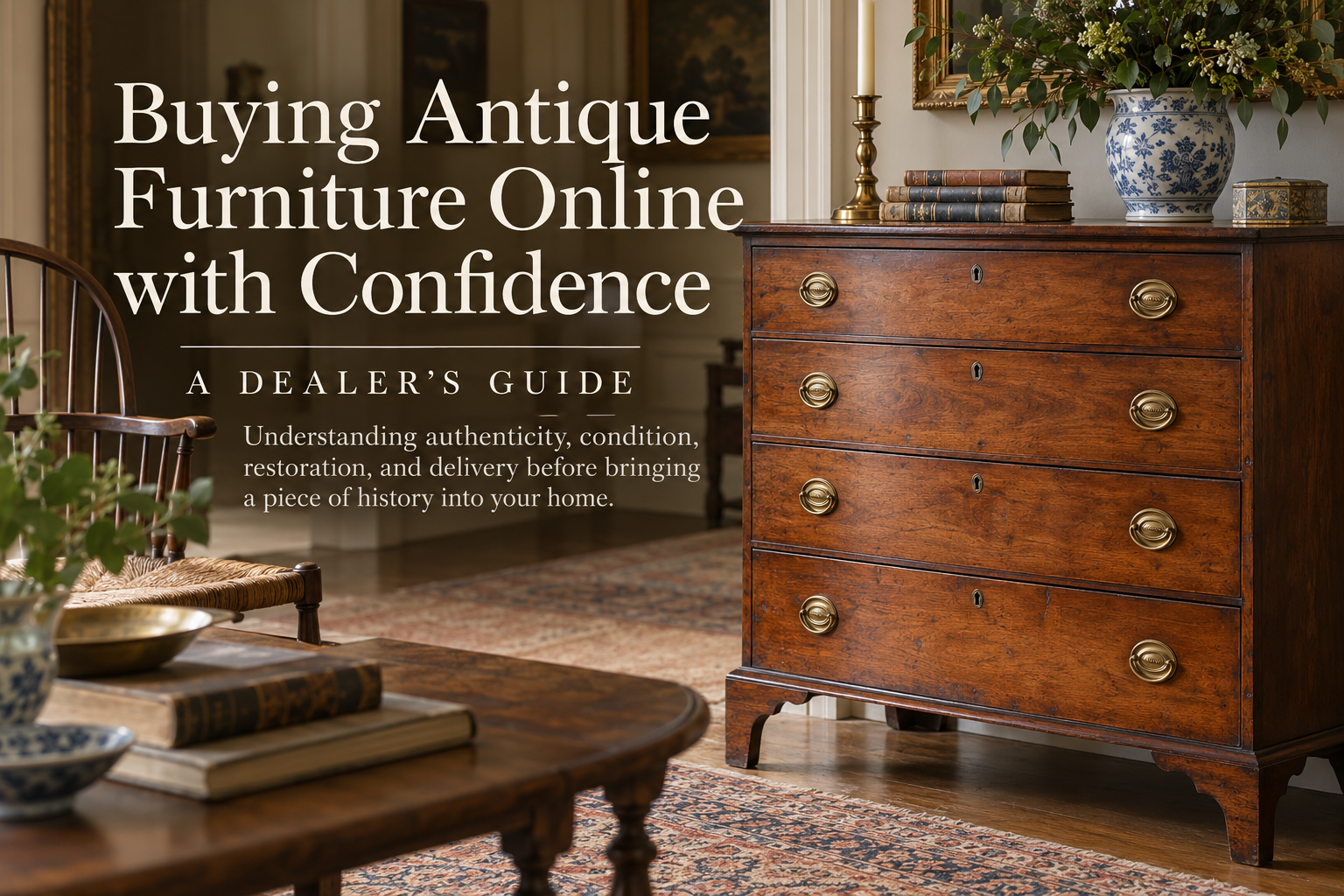
Buying Antique Furniture Online with Confidence: A Dealer's Guide
Understanding authenticity, condition, restoration, and delivery before bringing a piece of history into your home.
There is a moment familiar to anyone who has fallen in love with an antique online.
You notice the beautiful figure of the wood, the graceful proportions of a chest of drawers, or the unmistakable character of a piece that has survived for two centuries. You begin imagining it in your home. Perhaps it belongs beneath a favorite painting, beside a fireplace, or in a room that has been waiting for exactly the right piece of furniture.
Then come the questions.
Is it genuinely as old as the dealer suggests? What condition is it really in? Have parts been replaced? Will it look like the photographs? And perhaps most importantly, can you confidently purchase a valuable piece of furniture from someone hundreds or even thousands of miles away?
These are reasonable questions. In fact, we believe they are exactly the questions a thoughtful buyer should ask.
At Pearl City Antiques, we specialize in early American and English antique furniture, sourcing pieces from estates, auctions, and private collections. Over the years, we've come to appreciate that buying antique furniture is as much about understanding an object as it is about admiring its appearance.
Our approach is simple: a buyer deserves to understand what a piece is, what has happened to it during its lifetime, and what to expect when it arrives.
This guide is intended to help you make those judgments, whether you're purchasing your first antique chest or adding to a collection you've spent years assembling.
First, Understand What You're Actually Buying
One of the most important distinctions in the antique furniture market is the difference between period furniture and period-style furniture.
An American Federal chest made around 1800 belongs to the historical period in which Federal furniture was produced. A beautifully made Federal-style chest from 1940 may borrow the same graceful proportions and decorative vocabulary, but it belongs to a much later chapter of furnituremaking.
Both may be attractive. Both may be well made. Both may deserve a place in your home.
They are not, however, the same object.
This distinction becomes especially important when descriptions include familiar names such as Chippendale, Hepplewhite, Sheraton, Queen Anne, or Georgian. These terms can describe historical periods, design influences, or furniture made generations after the styles first became fashionable.
A chair described as Chippendale-style is not necessarily an eighteenth-century chair. Nor does a piece described as Hepplewhite necessarily come from the workshop of George Hepplewhite.
A knowledgeable dealer should be able to explain these distinctions rather than allowing an impressive name to imply more than the evidence supports.
For readers interested in understanding those historical traditions, we've explored them in greater depth in our Guide to American Colonial Furniture, Guide to Federal Furniture, and Guide to English Georgian Furniture.
Understanding what a piece is begins with understanding the language used to describe it.
Authenticity Is Established Through Evidence, Not One Identifying Feature
People frequently ask how to tell whether furniture is genuinely antique.
There is no universal test.
Hand-cut dovetails, wooden pegs, oxidation, old nails, and irregular construction can all provide valuable clues. But none of those characteristics, considered alone, establishes the age or authenticity of a piece.
Furnituremaking traditions persisted across generations. Older construction methods continued long after newer techniques became available. Later craftsmen also reproduced historical furniture with remarkable skill.
That is why we examine antique furniture as a complete object.
Its woods, construction, hardware, proportions, surface, secondary materials, and signs of age should contribute to a coherent understanding of its history.
Occasionally, documentary evidence makes that process particularly rewarding.
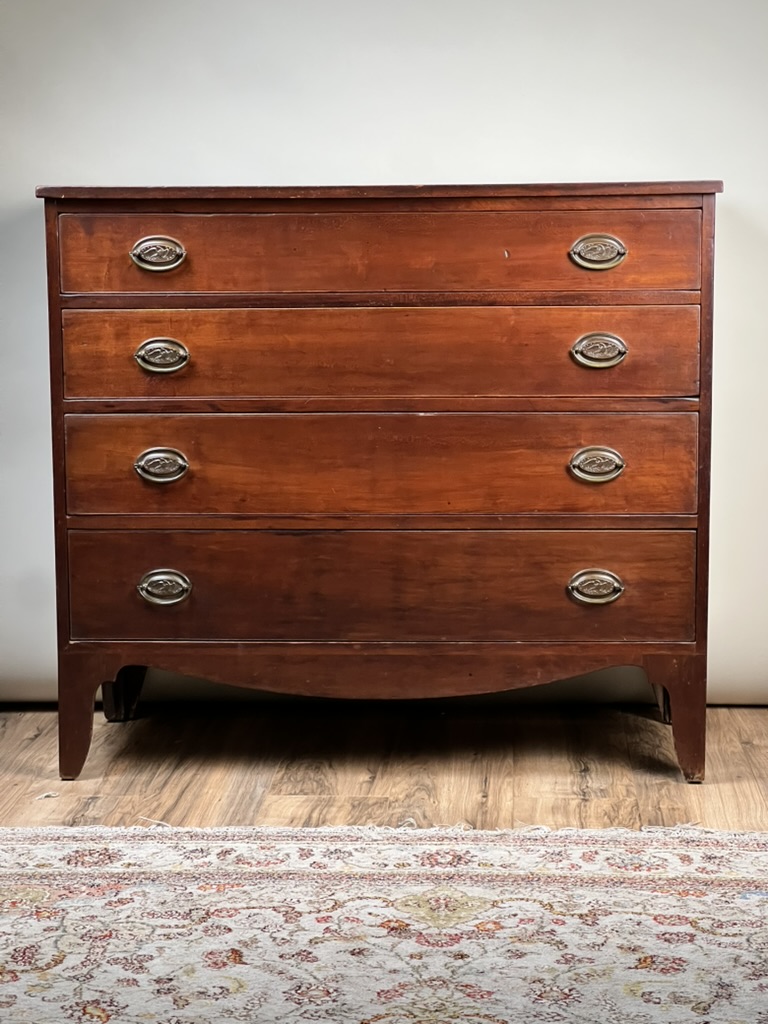
One example we've handled is a Federal cherry chest bearing the cabinetmaker's label of William Lloyd of Springfield, Massachusetts, dating to approximately 1800.
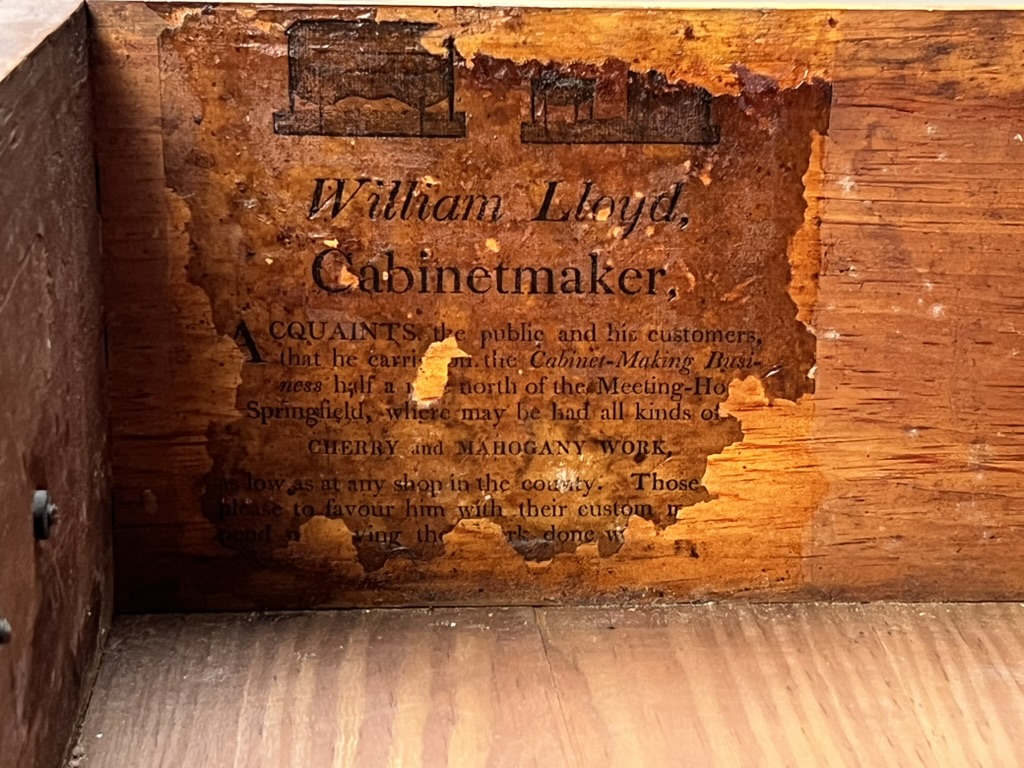
The surviving label provides an unusually tangible connection to an early Massachusetts cabinetmaker. But the label does not relieve us of the responsibility to examine the furniture itself.
We still consider the construction, drawer joinery, woods, proportions, and evidence of age. We also examine the relationship between the label and the object on which it survives.
All of these elements matter.
For the buyer, the lesson is straightforward: authenticity should be supported by a body of evidence, not simply asserted in a sales description.
And when the evidence is incomplete, a good dealer should be comfortable saying so.
There is considerable difference between a documented maker, an attribution based on scholarly comparison, a traditional family history, and an educated assessment of age and origin.
Those distinctions are not weaknesses in a description. They are signs of intellectual honesty.
Understanding Antique Condition: Age Is Not the Same as Damage
An antique piece of furniture is an object that has lived.
A chest made in 1800 may have occupied half a dozen houses. It may have been moved by generations of owners, transported across the country, refinished during a changing fashion, or repaired by a cabinetmaker whose own work is now more than a century old.
Its surface may carry scratches, small losses, oxidation, shrinkage, and the gentle irregularities that develop through ordinary use.
These characteristics are part of the reason we are drawn to old furniture.
But age alone should never excuse every condition issue.
When we evaluate a piece, we try to distinguish between three things: normal evidence of age, historic repairs or alterations, and problems that affect the furniture's present structural integrity or usefulness.
A small surface scratch on a two-hundred-year-old chest is very different from a compromised leg joint. An old veneer repair may be entirely stable, while lifting veneer that continues to separate deserves closer attention.
Likewise, a beautifully worn surface may contribute significantly to the character of a piece, while heavy staining or inappropriate modern refinishing can materially affect its appearance and desirability.
Return to the William Lloyd chest for a useful example.
Its right front leg has an old repair, and the bottom drawer has been reworked. Those details are disclosed in our description and photographed.
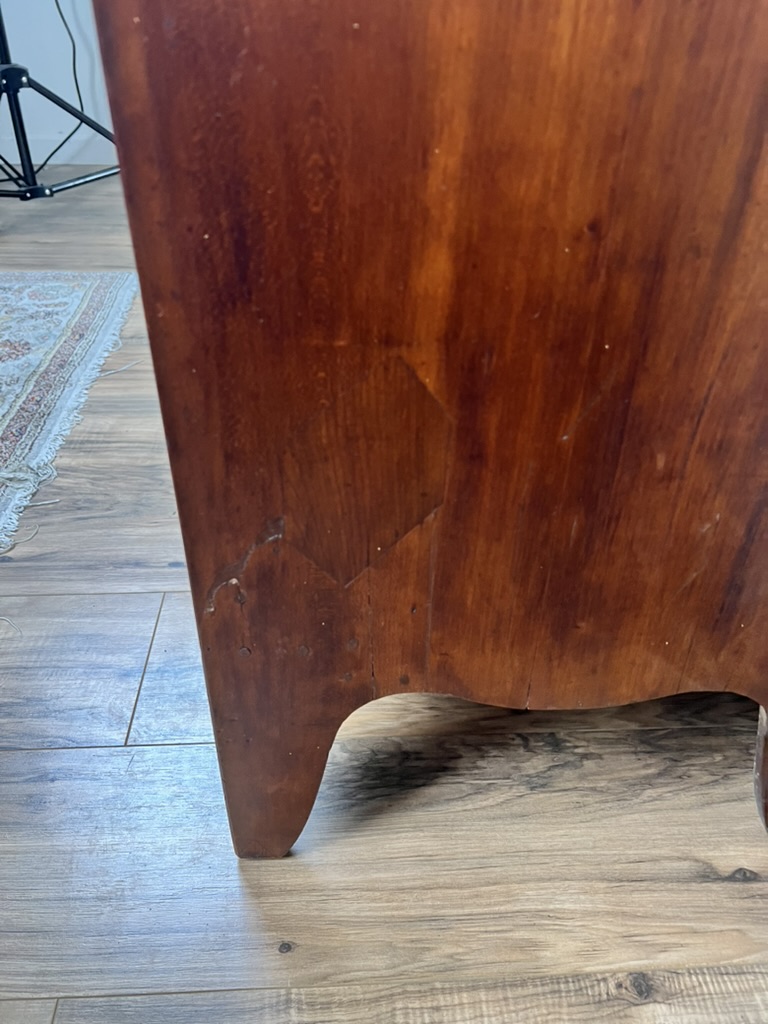
We do not regard their existence as a reason to conceal them or dismiss the furniture. Instead, they become part of understanding an otherwise significant early American object.
A buyer can then decide whether those historic changes are acceptable in light of the chest's age, appearance, construction, and asking price.
That is the purpose of a condition report.
It should help someone make an informed decision, not simply reassure them that everything is wonderful.
Does Restoration Make Antique Furniture Less Valuable?
Not necessarily.
Restoration is one of the most misunderstood subjects in antique furniture.
Some collectors place enormous importance on original surfaces, hardware, and construction. Others are primarily interested in living with beautiful period furniture that remains sound and useful.
Both perspectives are legitimate, although restoration can affect historical significance and market value considerably.
The important questions are what was restored, how extensively the work was performed, and whether the changes were appropriate for the object.
Consider a late eighteenth-century English secretary that has received a professional French-polished finish. Its appearance may be exceptionally attractive, but that restored surface should not be represented as an untouched eighteenth-century finish.
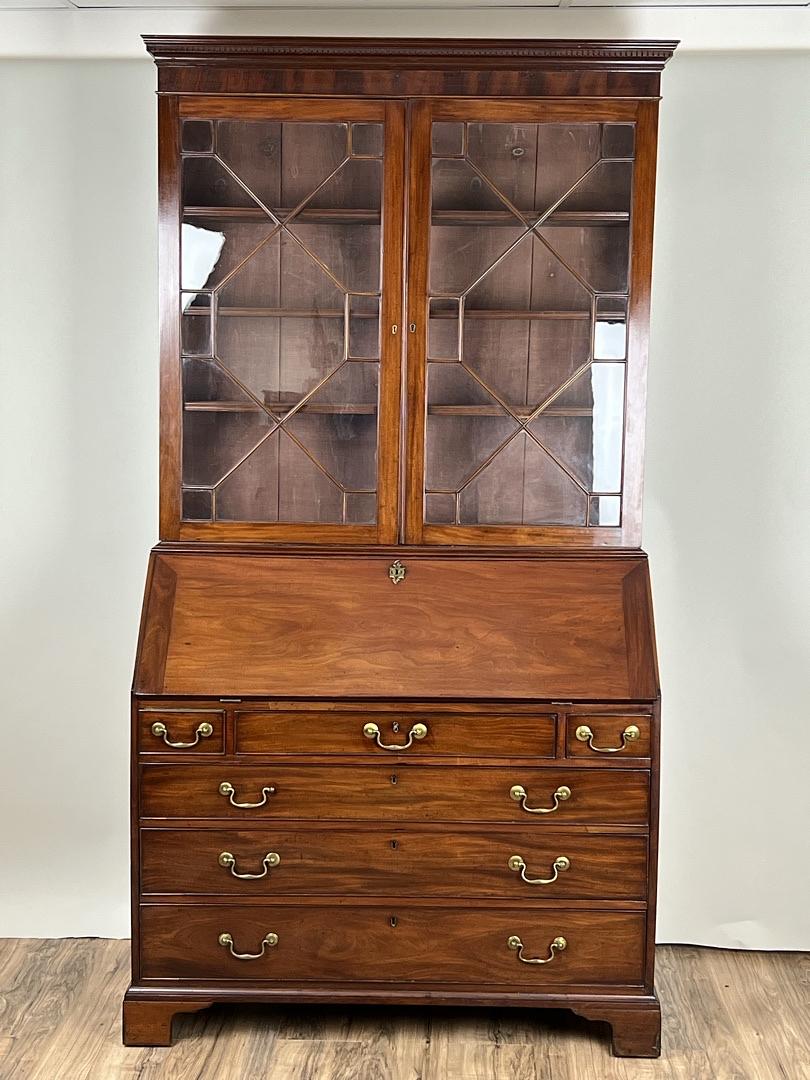
Likewise, replaced brass pulls do not automatically make an old chest undesirable. They do, however, change our understanding of the piece.
Structural repairs deserve similar consideration.
A carefully executed repair may have preserved an important piece of furniture for another century. A poorly conceived alteration may have compromised its original proportions or removed significant historic material.
We believe restoration should be described with nuance.
An antique does not have to be entirely untouched to be worth owning.
But a buyer should never have to discover an important alteration only after the furniture arrives.
What Good Antique Furniture Photographs Should Show
Buying furniture online requires confidence in the visual record.
Beautiful photography is important. It allows us to appreciate grain, color, proportion, and design. But photographs should do more than make furniture desirable.
They should make it understandable.
When considering an antique online, look for images showing the entire piece from several angles, along with meaningful details of its surface and construction.
Drawer interiors can be especially revealing. So can the underside of a table, the back of a cabinet, the feet of a chest, or the junction between repaired and original material.
Ask for additional photographs if a particular part of the furniture raises a question.
It is also important to understand the difference between actual product photography and styled editorial images.
At Pearl City Antiques, we sometimes present furniture in thoughtfully styled interior settings to help customers imagine how an antique might work in a contemporary home.
Those images are intended to provide design inspiration. The actual product photographs, measurements, and written condition description should remain the basis for evaluating the furniture itself.
This distinction becomes increasingly important as digital image technology develops.
A room setting can suggest possibilities. It cannot substitute for an accurate representation of an antique's physical condition.
Measurements Matter More Than You Might Think
A handsome secretary or chest-on-chest can appear surprisingly compact in a photograph.
In person, it may be imposing.
Antique furniture was produced in a remarkable variety of dimensions. Two seemingly similar chests may differ substantially in height, depth, drawer capacity, or overall scale.
That matters both aesthetically and practically.
Before purchasing, consider not only whether the piece will fit against the intended wall, but whether it can actually reach that location.
Doorways, staircases, landings, elevators, ceiling heights, and tight turns all deserve attention.
Historic homes can be particularly challenging because door openings and stairways may be narrower than those found in modern construction.
We encourage buyers to review all published dimensions and ask for any additional measurements they need.
It is far better to discover a potential access issue before arranging delivery than when a substantial antique secretary is standing outside your front door.
How Should Antique Furniture Be Shipped?
For many buyers, delivery is the greatest source of uncertainty.
It's one thing to purchase a small decorative object that can be carefully boxed and sent through a parcel carrier. A large antique chest, dining table, or glazed bookcase requires an entirely different approach.
Professional furniture transportation generally involves protective wrapping, specialized handling, and scheduled delivery arrangements.
Depending on the piece and destination, blanket-wrap or white-glove furniture delivery may be appropriate.
At Pearl City Antiques, we help coordinate nationwide furniture delivery through experienced transportation partners. Because antique furniture varies so greatly in size, fragility, and handling requirements, we encourage customers to obtain a personalized delivery quote before committing to a purchase.
The destination matters. So do access restrictions, stairs, unusual dimensions, and special handling needs.
Delivery timelines can also vary by route and carrier availability. Furniture transported through specialized delivery networks typically requires more flexibility than an ordinary parcel shipment.
Our goal is to make those arrangements clear before the transaction is finalized.
If something unexpected occurs during transportation, communication is essential. We ask buyers to inspect their purchases promptly upon delivery and contact us about any concerns so that we can help address the issue with our delivery partners.
You can read more about our shipping and delivery process.
For most antique furniture, a thoughtfully arranged delivery is well worth the additional planning.
What About Price? Is Older Furniture Always More Valuable?
Age contributes to the interest of antique furniture, but age alone does not determine value.
An ordinary nineteenth-century chest may be less desirable than an exceptionally well-made twentieth-century piece. Similarly, two eighteenth-century tables of roughly the same age may command very different prices.
Factors that can influence value include craftsmanship, design, rarity, regional origin, maker attribution, condition, original surfaces, provenance, and current market demand.
Proportion and aesthetic quality matter enormously as well.
Sometimes a piece possesses a remarkable combination of attributes: beautiful woods, restrained design, useful dimensions, strong condition, and enough individuality to distinguish it from otherwise similar examples.
Those qualities can make furniture desirable even when a documented maker is unknown.
We encourage buyers to consider the totality of an object rather than relying on a date or an impressive attribution.
Most importantly, antique furniture should be purchased because you appreciate the object itself and believe the price is reasonable in the context of its quality and market.
No responsible dealer should promise that every antique will appreciate in value.
Understand the Dealer's Policies Before Purchasing
Every antique is unique, and that reality affects how dealers handle purchases and returns.
Unlike new furniture manufactured in quantity, a period chest or table cannot ordinarily be replaced with an identical example.
For that reason, many antique dealers maintain policies that differ from those of conventional furniture retailers.
At Pearl City Antiques, sales are generally considered final. However, significant discrepancies between an item and its description, or damage occurring during delivery, deserve prompt attention.
We ask customers to contact us within 48 hours of delivery in those circumstances so we can work toward an appropriate resolution.
We strongly encourage buyers to review our return policy and ask questions before purchasing.
We would always prefer to answer one more question or provide another photograph than have someone make a purchase with an unresolved concern.
Five Questions Worth Asking Before Buying Antique Furniture Online
Whether purchasing from us or another dealer, we believe these questions are useful:
-
What evidence supports the stated age, origin, or maker attribution? Ask the dealer to distinguish documented facts from informed opinions.
-
What repairs, restoration, or replacements should I know about? Pay particular attention to structural issues, replaced elements, and refinished surfaces.
-
Can you provide additional photographs or measurements? A reputable dealer should be willing to help clarify important questions.
-
What will the total cost be, including delivery? Understand the transportation arrangements, likely timeline, and access requirements.
-
What happens if the furniture arrives damaged or materially different from its description? Review the dealer's policies and discuss any uncertainties before purchasing.
A dealer's willingness to engage with these questions can tell you a great deal about the experience you're likely to have.
Buying Antique Furniture Is Ultimately an Exercise in Trust
We have always believed that the most compelling antiques are more than beautiful objects.
They connect us to people we will never meet.
A cabinetmaker working in Massachusetts in 1800 could not have imagined the world in which his furniture would eventually find itself. Nor could the original owner of an English Georgian secretary have anticipated that it might one day occupy a library in an American home more than two centuries later.
Yet these pieces have survived.
They have been used, cherished, neglected, repaired, moved, and passed from one generation to another.
When someone purchases an antique, they become part of that continuing story.
Our responsibility as dealers is to represent the object as faithfully as possible, including the imperfections and unanswered questions that come with genuine age.
We do not believe confidence comes from pretending every antique is flawless.
It comes from knowledge, transparency, careful description, and a willingness to stand behind the information we provide.
And when those things are present, buying an antique online becomes far less intimidating.
It becomes what it ought to be: the pleasure of discovering something remarkable and giving it a new place to belong.
Greg & Jessi
Pearl City Antiques
Explore Our Collection
Whether you're looking for an early American cherry chest, a finely proportioned English Georgian table, or a distinctive piece for a thoughtfully collected interior, we invite you to explore our changing inventory.
Browse Antique Furniture at Pearl City Antiques
Have a question about a particular piece? We're always happy to discuss condition, dimensions, attribution, or delivery before you make a decision.
[Contact Pearl City Antiques](https://pearlcityantiques


